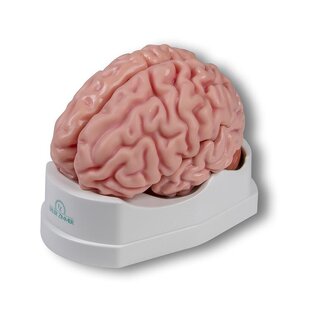
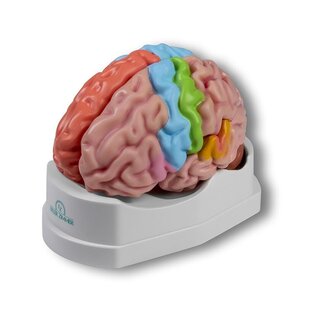
Brain model in 8 parts on stand
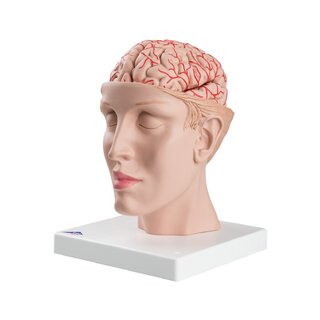
This brain model in our range stands out due to its very realistic surface, which is both slightly shiny and provided with small, visible blood vessels in the grooves between the brain convolutions.
 Part-pay from 18.19 €/mo
- In stock – delivery 4-8 days
- Cheapest shipping from 11.09 €
- Pay with Swish, card or invoice
- Personal customer service by phone and e-mail
- Swedish online store since 2008
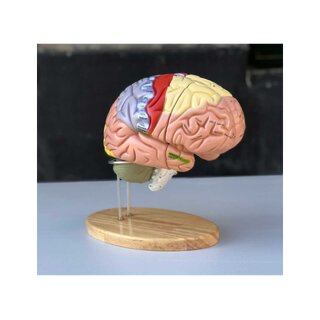
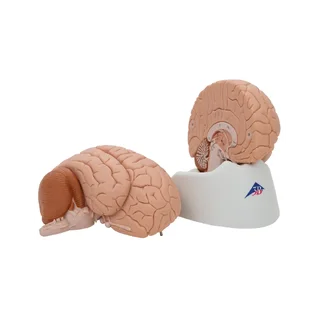
This brain model in our range stands out due to its very realistic surface, which is both slightly shiny and provided with small, visible blood vessels in the grooves between the brain convolutions. The model consists of eight separate parts, which makes it easy to study the internal structures of the brain in detail. It is a simpler alternative to our more advanced models, without compromising on quality.
The model is made of a very hard and robust plastic, which makes it different from many of our other models that are made of flexible and hollow plastic. This material cannot be pressed or shaped, which some may find less comfortable when handling and studying. However, other users appreciate the stable and durable feel.
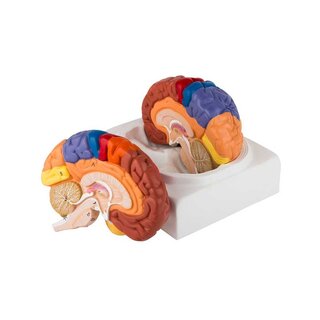
The eight parts are held together by small, discreet magnets, and different areas of the brain are marked with different shades of color. This model is slightly smaller than an adult human brain, with dimensions of 11 x 12 x 15 cm and a weight of 700 grams. The model is delivered on a sturdy, white removable stand.
Important anatomical structures are numbered, and an accompanying overview provides explanations corresponding to these numbers. Please note that the overview is only available in English.
**Important to note:**
The numbering and naming are indicative. Therefore, be careful when using, as some anatomical structures may be on the border of other nearby areas.
Anatomical details:
The model shows the human brain, which can be divided into three main areas: the cerebrum (cerebrum), the cerebellum (cerebellum) and the brain stem (truncus encephali). These areas are clearly marked with different shades of color, and the model provides a clear picture of the difference between gray and white matter.
The cerebrum (telencephalon and diencephalon) shows the cerebral lobes as well as the thalamus, hypothalamus and pituitary gland. The cerebellum shows the vermis cerebelli and the cerebellar hemispheres. The brainstem shows the three main parts (midbrain, pons and medulla oblongata) and the origins of the cranial nerves.
The model also shows structures such as the fornix, the ventricular system and the first two cranial nerves (the olfactory and optic nerves), which do not originate in the brainstem. The eight parts make it possible to study the internal structures of the brain in 3D.
Limbic system:
Many customers ask for information about the limbic system when purchasing brain models. This system consists of several anatomical structures in the central nervous system (CNS) and is primarily responsible for emotional functions such as anxiety, aggression, mood, memory and social adaptation. Clinically, it is often linked to psychiatric disorders.
The limbic system includes the amygdala, hippocampus, parahippocampal gyrus, hypothalamus, fornix, mammillary body and prefrontal cortex. This model shows the hippocampus and fornix, but not the amygdala. The amygdala is deeply involved in anxiety and emotional processing of impressions and is located in front of the hippocampus in the anterior part of the temporal lobe.
To see both the amygdala and hippocampus on a model, the brain must be cut into at least two frontal or coronal sections, which is not possible with this model. However, we offer a partially transparent brain model in our premium category where both structures can be seen.
Clinical use:
The model can be used to understand lesions and disorders in specific parts of the brain, such as epilepsy, brain tumors, hydrocephalus, cranial nerve injuries and multiple sclerosis. Although the blood supply to the brain is not shown on the model, it can also be used to understand the mechanisms behind stroke (apoplexy).
NOTE: the model is compatible with this Cranium (click here)
| Item number | A617 |