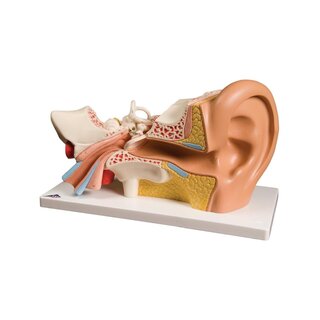


Ear model, three x normal size, 4 parts
The model shows the outer ear, middle ear and inner ear. The eardrum is demonstrated with the hammer, anvil and stirrup. The cochlea and labyrinth are demonstrated, as well as the associated nerves. The various structures can be dismantled.
 Part-pay from 22.12 €/mo
- In stock – delivery 4-8 days
- Cheapest shipping from 11.20 €
- Pay with Swish, card or invoice
- Personal customer service by phone and e-mail
- Swedish online store since 2008
The model shows the outer ear, middle ear and inner ear. The eardrum is demonstrated with the hammer, anvil and stirrup. The cochlea and labyrinth are demonstrated, as well as the associated nerves. The various structures can be dismantled. The model is delivered on a stand.
Anatomically, the model shows the entire ear, which consists of the outer ear (incl. ear canal), middle ear and inner ear. In addition, a piece of the eustachian tube, which communicates with the nasopharynx (upper part of the throat), and the location of the ear in the temporal bone (os temoporale) appear.
The model can be divided into four parts as follows:
The eardrum and the three bones of the middle ear can be removed in one piece
The labyrinth (including the cochlea and the auditory and balance nerves) can be removed and divided into 2
Several of the anatomical structures are seen in three dimensions. Many anatomical structures are seen, such as:
The eardrum with small details
The middle ear 3 bones (hammer / malleus, anvil / incus and stirrup / stapes) with small details
The oval window
The inner ear (cochlea and balance organ including the arches) with small details
The auditory and balance nerve (vestibulocochlear nerve)
Internal carotid artery as well as some muscles
Clinically, the model can be used to understand ear diseases such as otitis media, cholesteatoma (bone), perforated eardrum and bullous myringitis.
In addition, the ear model can be used to understand examination methods and treatments such as the construction of drains (tympanic drainage).
| Item number | 6020.12.00 |